Pose and joint angles
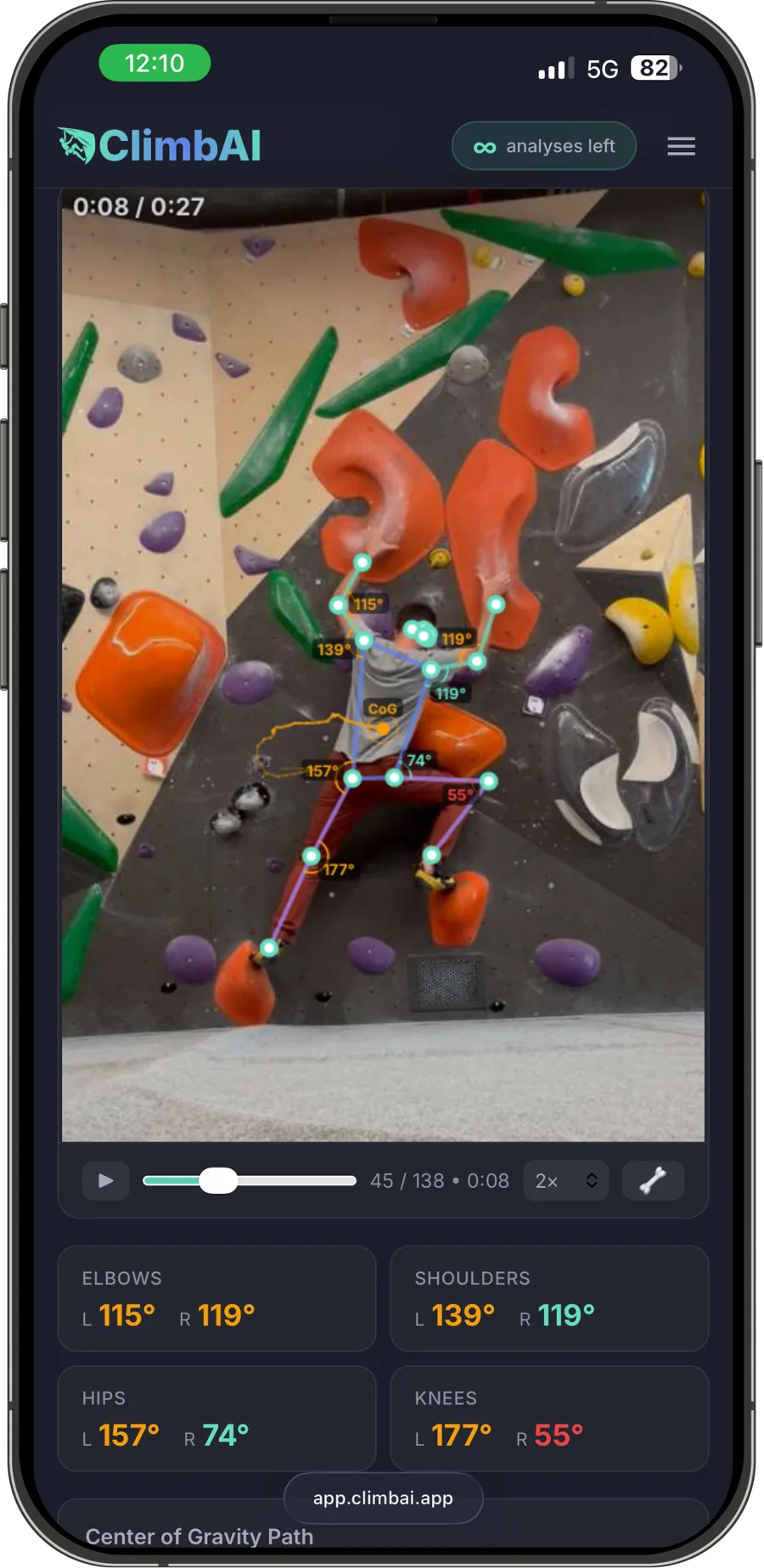
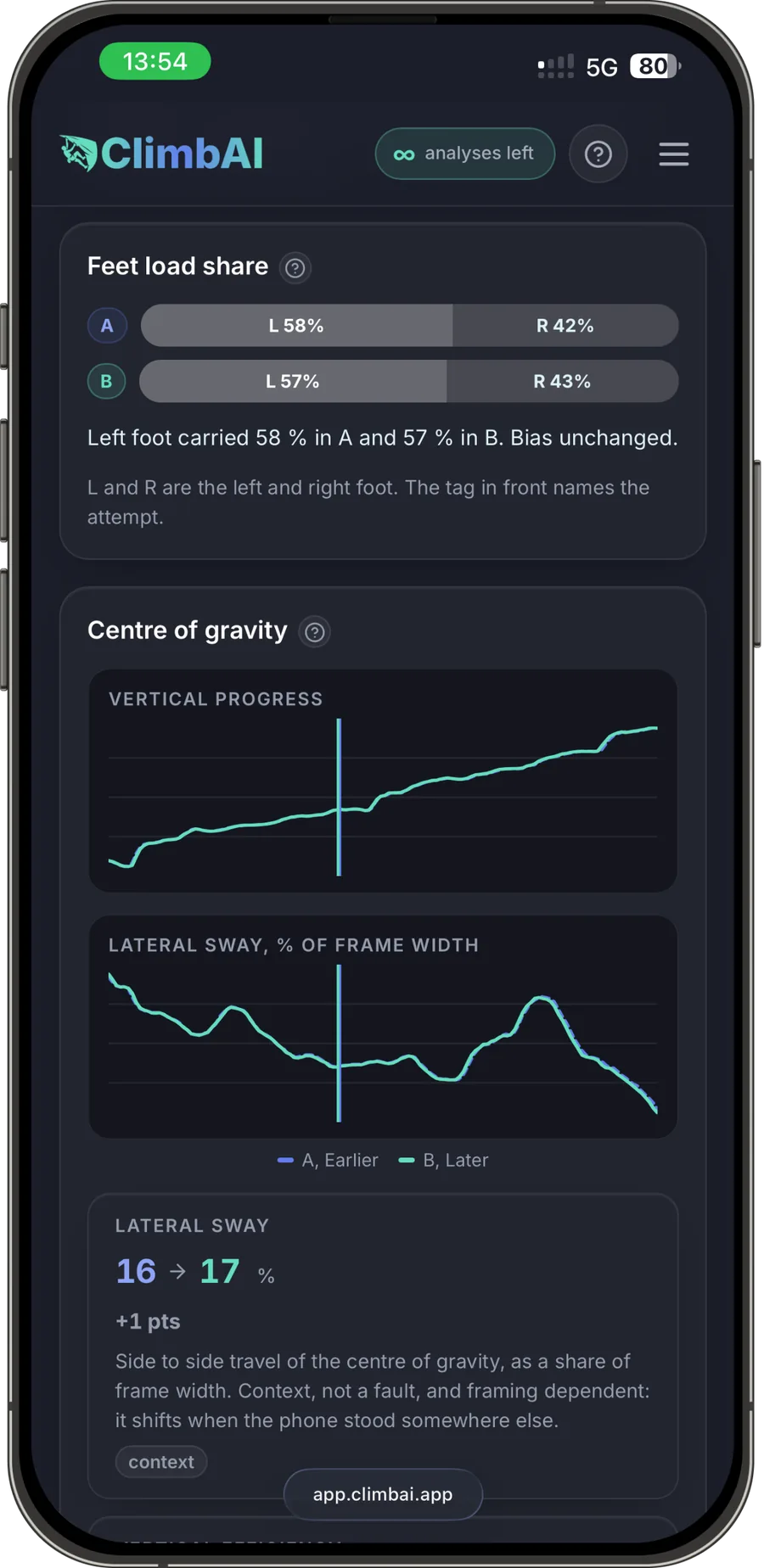
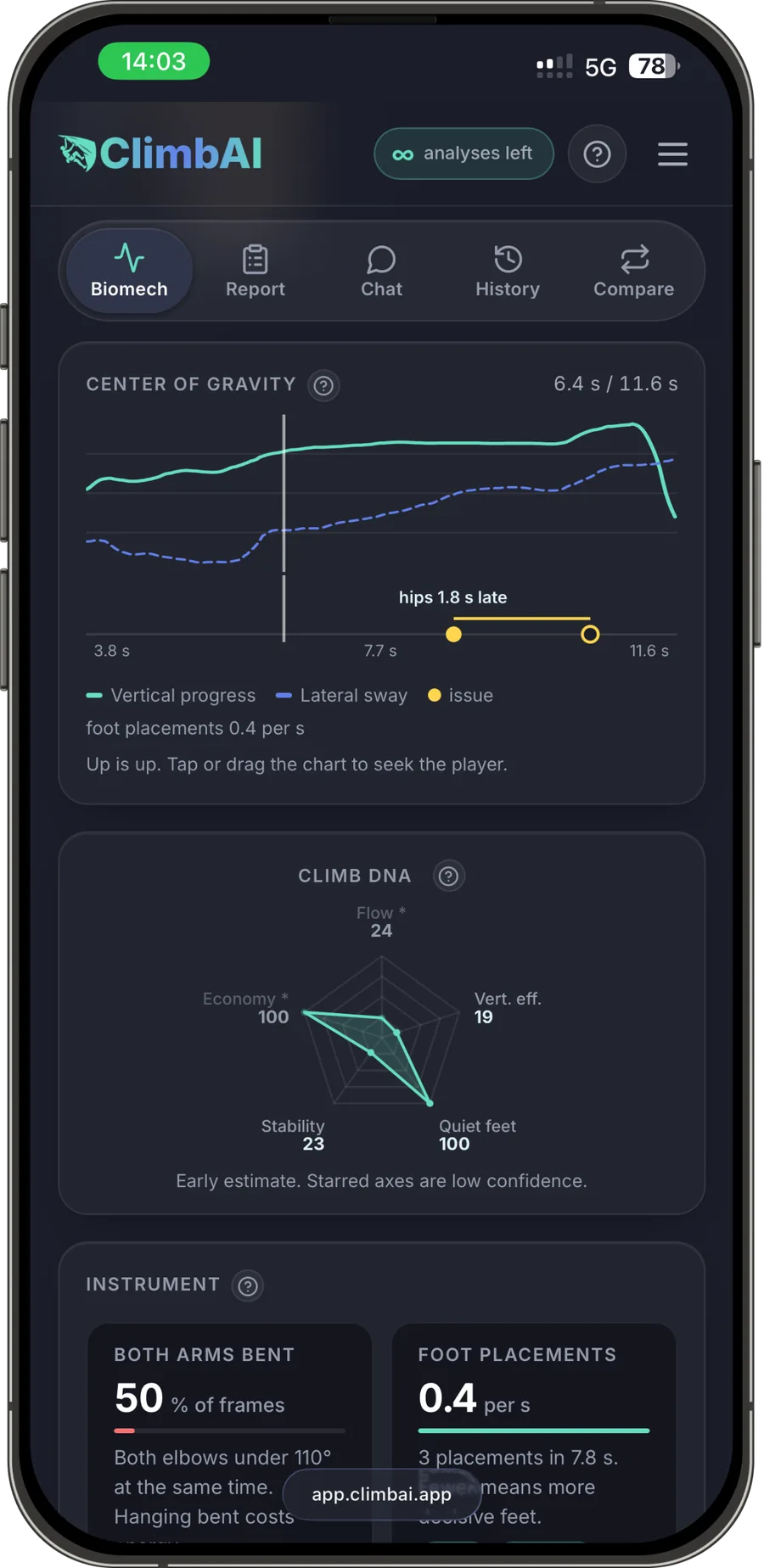
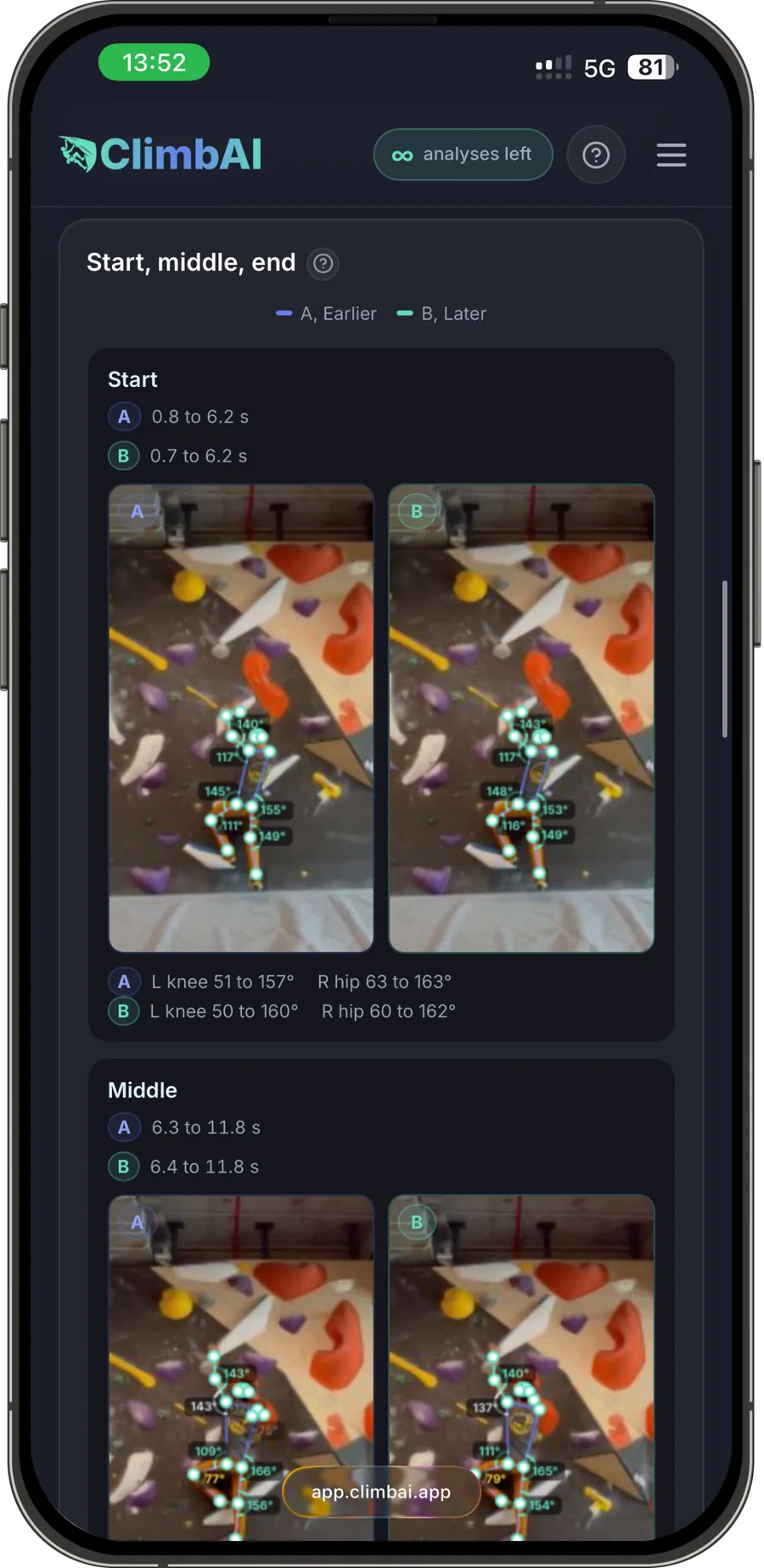
Every frame of the video is analysed to find the body's joints. Elbows, shoulders, hips and knees are measured left and right, and the centre of gravity is traced through the climb.

Record a boulder attempt with your phone. ClimbAI reconstructs your body movement from the video, measures it, and returns feedback a coach would recognise: what worked, what did not, and what to work on next.
ClimbAI exists because advanced movement analysis used to be available only to professional climbers and federations. We wanted it for ourselves, and then for everyone who wants to improve.
It does not replace coaches. It complements their daily work with measurements they could not see before, and it gives climbers without a coach access to the same kind of analysis. The approach is not tied to climbing; other sports may follow.
Our models find the body's joints in each frame of the video and follow them through the climb.
Joint angles, left-right asymmetry, timing and the centre-of-gravity path are computed from the tracked joints.
The feedback is written from those measurements and checked against them before it reaches you.
The models behind ClimbAI are built by ALNEVIS, not taken off the shelf. They are trained on climbers' videos annotated by human coaches: more than 6000 hours of footage from 98 climbers, from V0 to V12, annotated by five certified coaches.
More than 700 climbers have registered so far. We also bring ClimbAI to the climbing community in person, with live demos at events such as Rock Master 2026, where we had a stand.
Every frame of the video is analysed to find the body's joints. Elbows, shoulders, hips and knees are measured left and right, and the centre of gravity is traced through the climb.
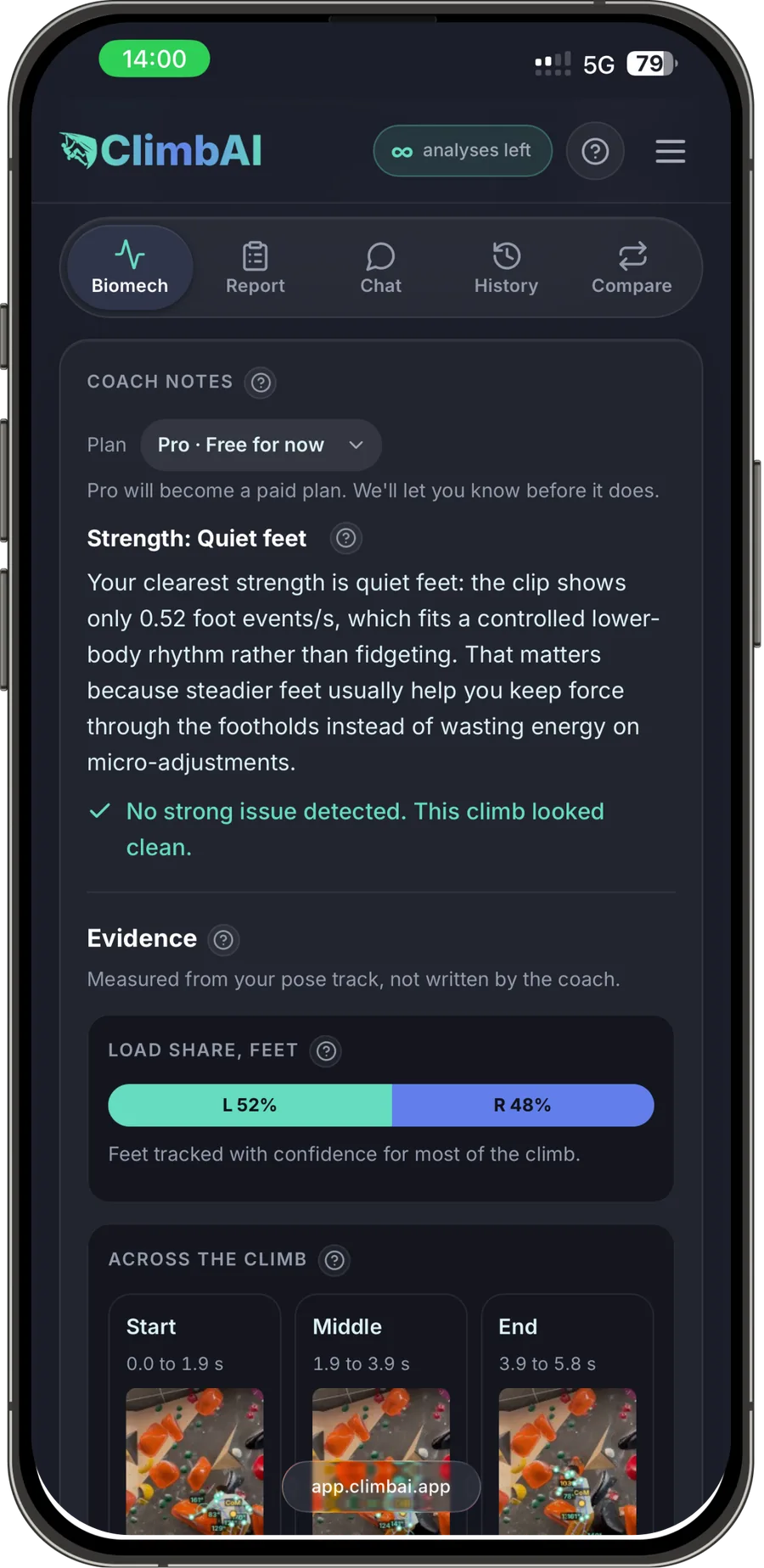
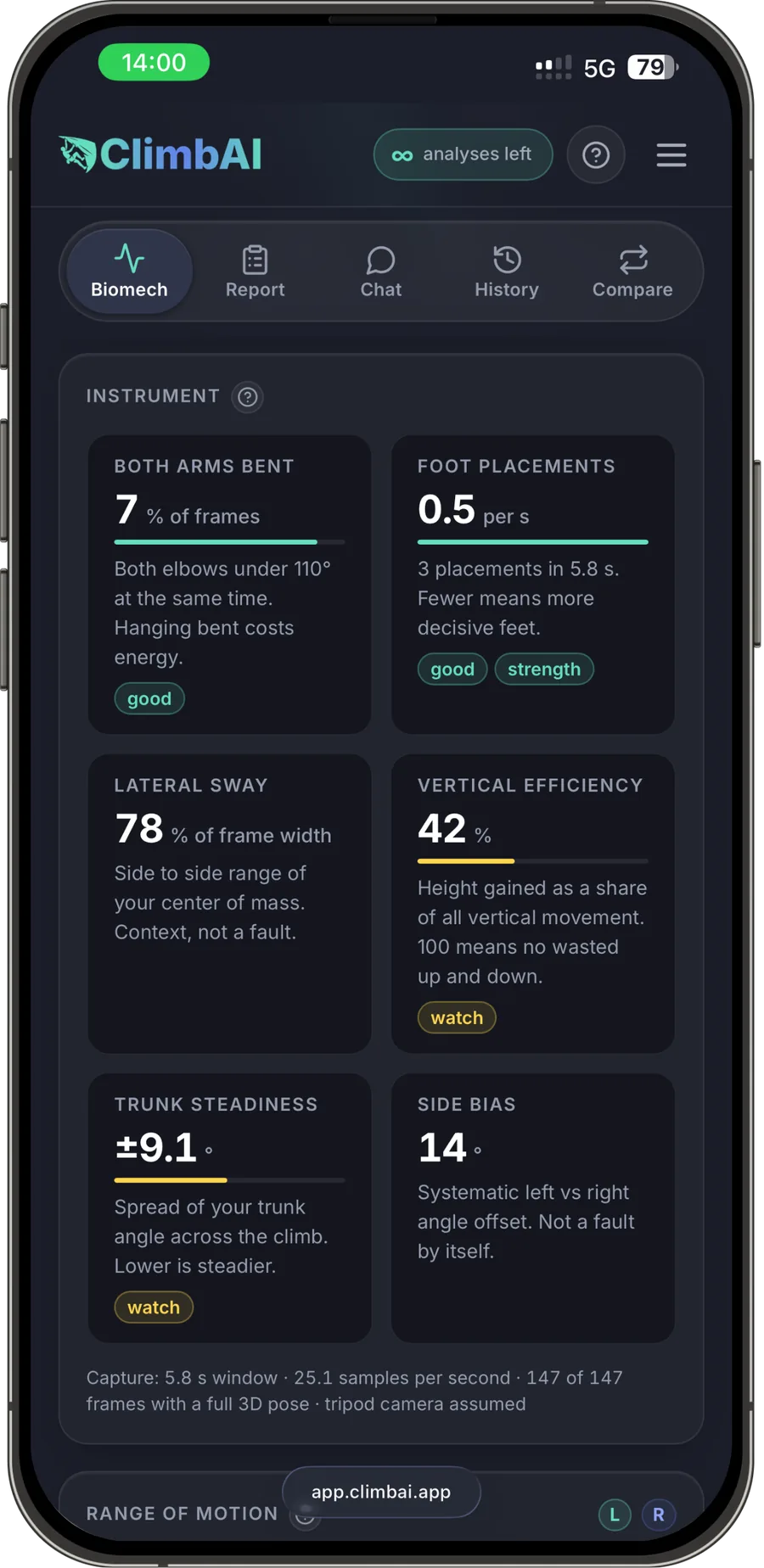
Metrics such as time with both arms bent, foot placements, lateral sway, vertical efficiency and trunk steadiness, each with a short explanation. The evidence is measured from the pose track, with the start, middle and end of the climb side by side.
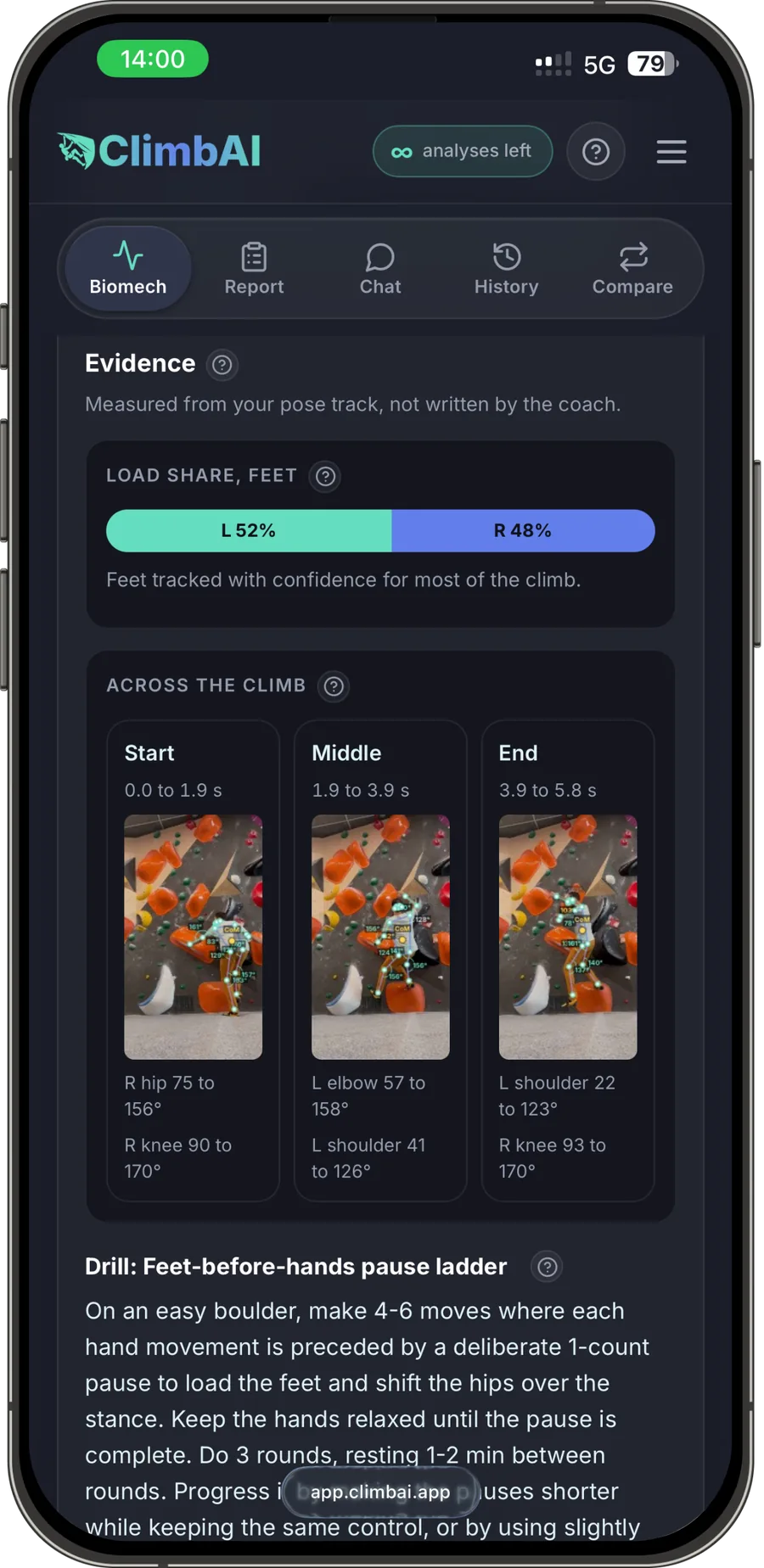
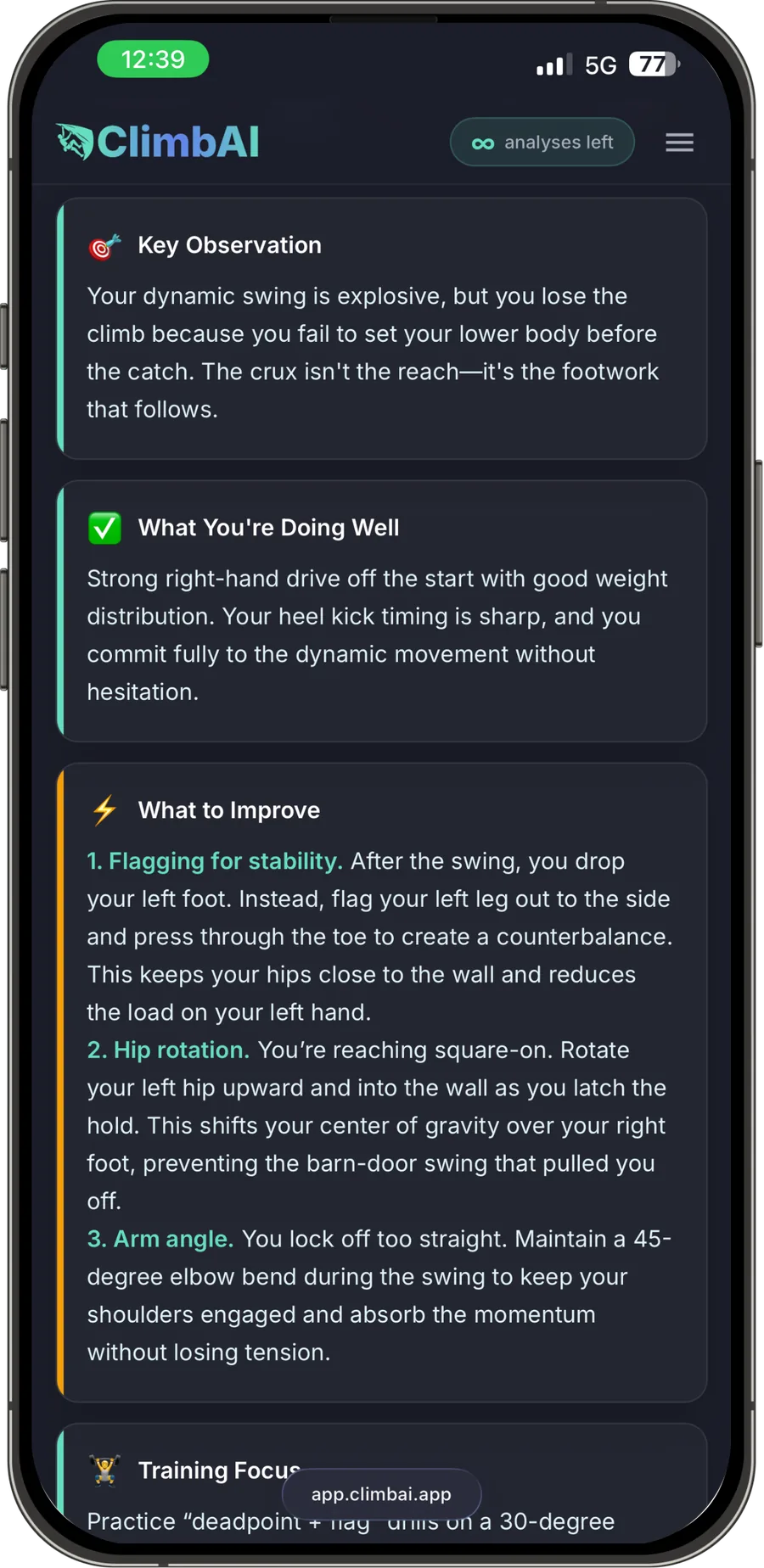
A key observation, what you are doing well and what to improve, written the way a coach would say it, with a training focus to take to the next session.
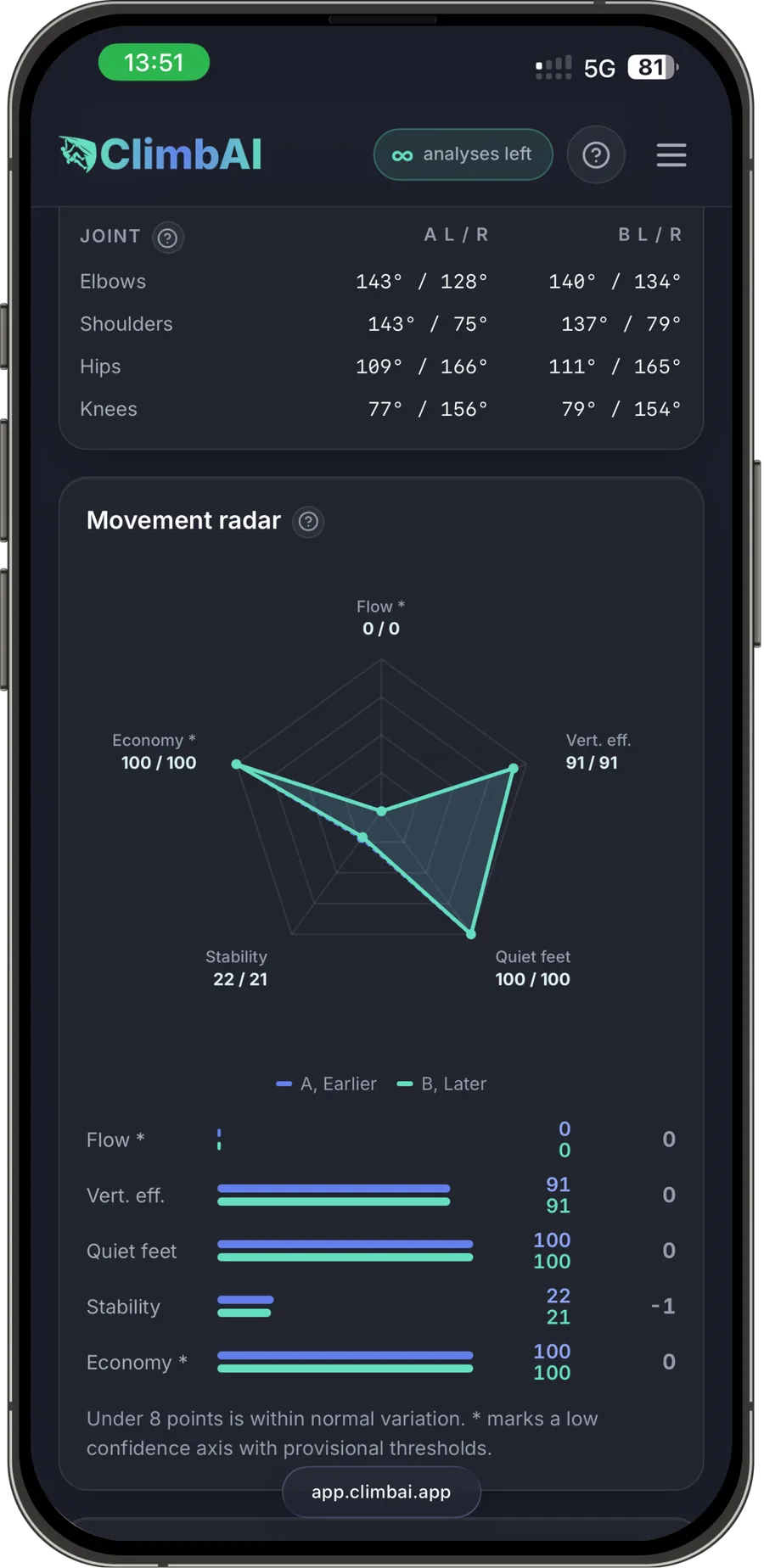
Two attempts side by side, an earlier and a later one, frame by frame with the same joints and angles. A joint table and a movement radar show what actually changed between them.
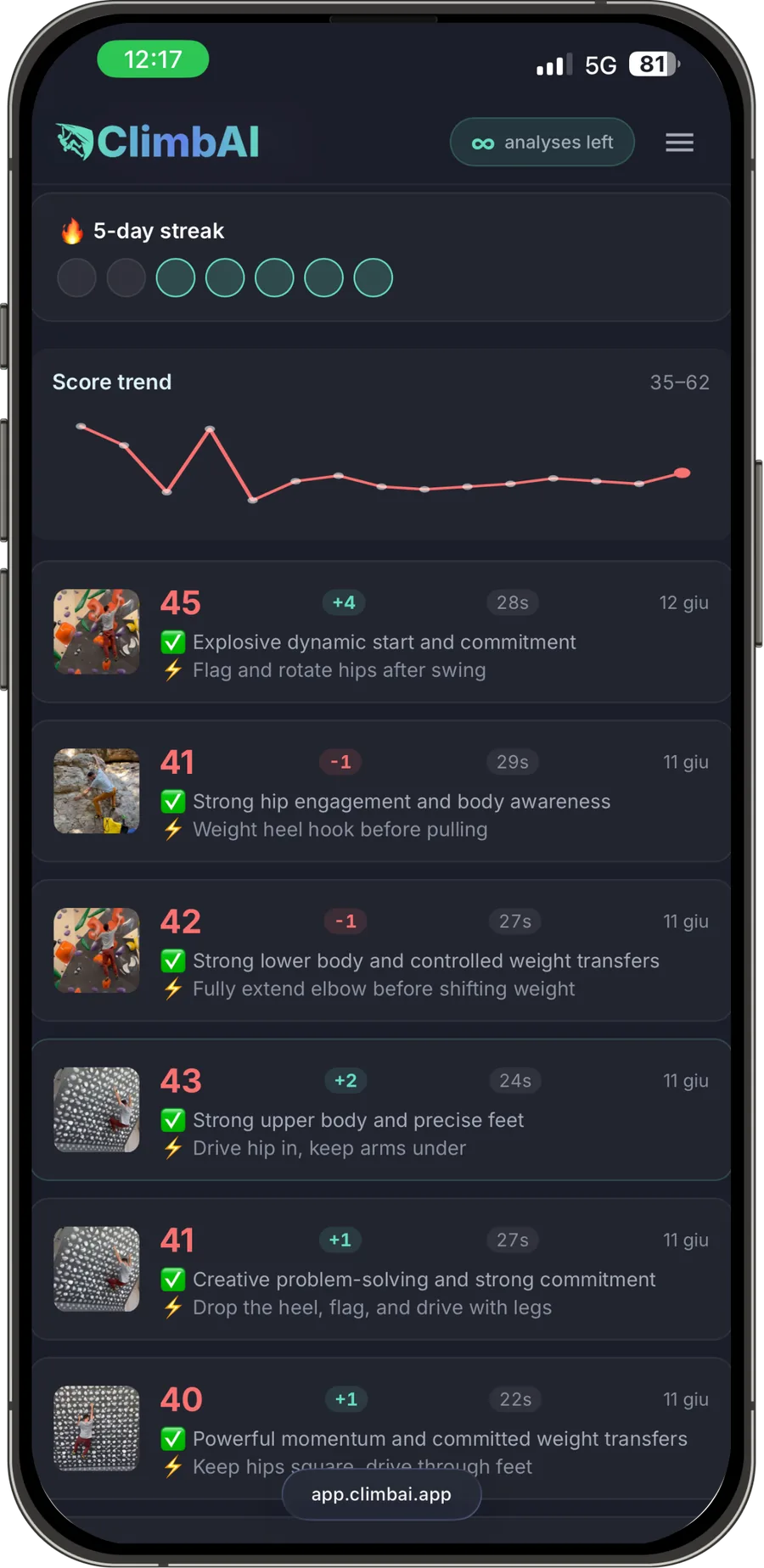
Each analysis gets a score. The history and the trend show how your climbing changes from one session to the next.